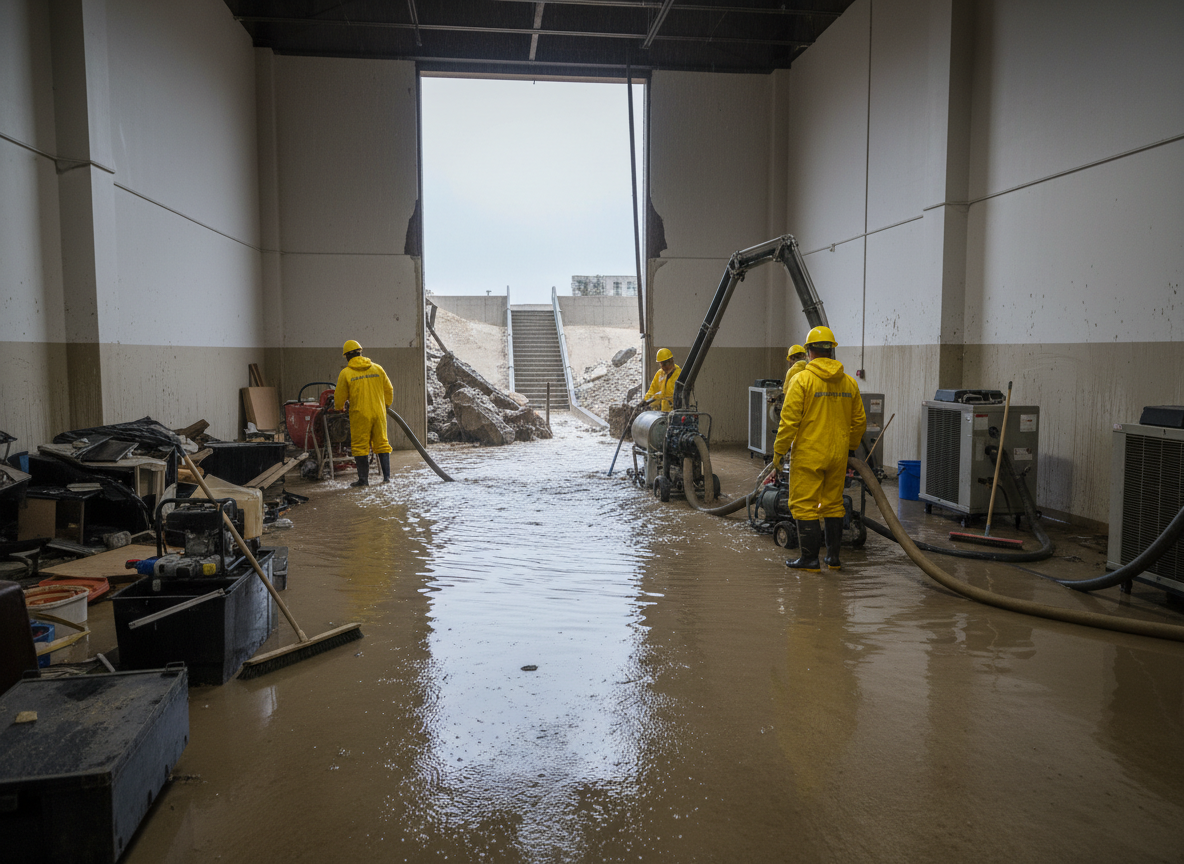
Adelanto gets little rain, which is exactly why a hard storm can catch a home off guard. Winter is the wet season in the Victor Valley, and Victorville averages 6.27 inches of rain a year across about 28 days with measurable rain. When a storm stalls over the valley, water runs off hard desert ground fast, pools against walls and pushes in under doors and through garages.
The Mojave River, which runs through the Victor Valley east of Adelanto, is an intermittent river whose flow is mostly underground and whose surface channel stays dry most of the time. Extreme flooding is still possible: during heavy El Nino rains on February 22, 1993, the river overflowed onto bridges. Desert washes behave the same way, dry for months and then fast-moving after heavy rain.
Outside water is treated as Category 3, grossly contaminated water, under the IICRC S500 standard, because it carries soil, debris and whatever it picked up on the way in. The EPA advises calling a professional experienced with buildings damaged by contaminated water when sewage or other contaminated water is involved. Soaked carpet, pad, insulation and the lower section of drywall usually come out, and the remaining structure is cleaned and dried.
Stay safe first. Ready.gov warns that six inches of moving water can knock a person down and one foot of moving water can sweep a vehicle away, so never walk or drive through flowing water. Once water has stopped entering, keep clear of wet outlets and appliances, photograph the high-water line and damaged belongings, and keep children and pets out of the affected rooms.
Coverage is where storm damage differs most from a pipe burst. The California Department of Insurance says homeowners policies do not cover flood damage, though they do cover other kinds of water damage, and flood insurance is a separate policy. The NAIC adds that damage from ground water or rain runoff is generally not covered, while rain that enters through a roof or window damaged by strong wind may be. Ask your agent which applies before repairs begin.
If a claim is denied, California's fair claims rules require the insurer to put the denial in writing, list the reasons and tell you that you can ask the California Department of Insurance to review it. The Department's consumer hotline is 1-800-927-4357.
After the outside water is gone, the drying steps on the emergency water removal page apply, and materials left wet too long are covered under mold remediation. Properties near the Mojave River in Oro Grande and Victorville can call the same number.
Flood and Storm Water Cleanup Services We Offer
✓Storm Runoff and Mud Cleanup
Water and silt that came in under doors or through a garage are removed and the floor and walls are cleaned and dried.
✓Wind-damaged Roof Leak Cleanup
Ceilings, insulation and walls dried after rain enters through roofing or windows damaged in a storm.
✓Sewage and Contaminated Water Cleanup
Category 3 water handled with protective equipment, removal of porous materials and disinfection before drying.
How it works
- 1
Wait for safe conditions
No one enters while water is still moving or power is live in wet areas.
- 2
Remove water and debris
Water, mud and soaked materials are removed from the affected rooms.
- 3
Clean and disinfect
Remaining surfaces are cleaned because outside water is treated as contaminated.
- 4
Dry and document
Drying equipment runs until readings confirm the structure is dry.